
As a psychologist, you can save thousands on your tax bill by claiming the right deductions.
But many practitioners leave money on the table by missing key write offs or improperly documenting their expenses.
Get your 2026 taxes handled
Join Heard by December 31 for up to $3,227 in value and an on-time 2026 tax return. Book a free consult to learn more.
Book a free consultWhy tax deductions for psychologists matter
Tax deductions directly reduce your taxable income, putting more money back in your pocket.
For a typical psychologist making $100,000, maximizing deductions could save $5,000 to $10,000 annually in taxes. But you need to know what qualifies and keep proper records.
Understanding tax deductions for psychologists
A tax deduction is a business expense that reduces your taxable income. The IRS allows you to deduct any "ordinary and necessary" expenses related to running your psychology practice. Personal expenses generally don't qualify.
As explained in our guide to determining tax deductions, the expense must be directly tied to your practice operations.
Main categories of tax deductions for psychologists
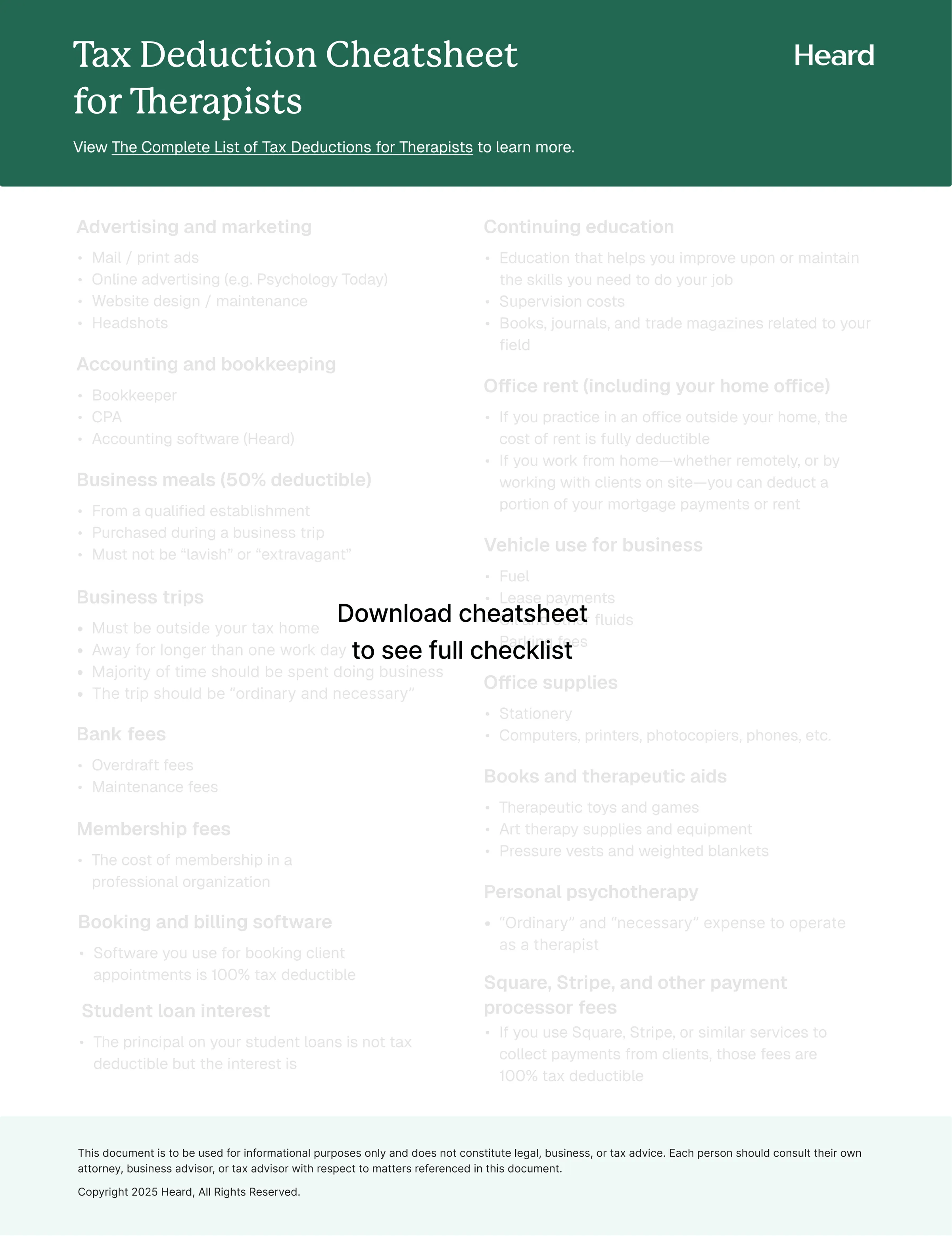
Common deductible expenses include:
- Office rent and utilities
- Professional insurance
- Continuing education
- Office supplies and equipment
- Marketing costs
- Professional memberships
- Business travel
Office and home office deductions
If you see clients from a dedicated home office, you can deduct a portion of your home expenses. This includes rent/mortgage interest, utilities, repairs, and insurance. The deduction is based on the percentage of your home used exclusively for business.
For a traditional office, you can deduct:
- Rent payments
- Property insurance
- Utilities
- Maintenance and repairs
- Furniture and decor
Continuing education, licensing, and professional development costs
You can deduct expenses that maintain or improve your professional skills, including:
- Continuing education courses
- Professional conference fees and related travel
- License renewal fees
- Professional association dues
- Books and professional journals
- Clinical supervision costs
Travel, equipment, and supplies deductions
Business travel expenses are deductible when properly documented. This includes:
- Transportation costs (flights, car rental, mileage)
- Hotel stays
- Meals during business travel (50% deductible)
- Conference registration fees
Office equipment and supplies that qualify include:
- Computers and software
- Office furniture
- Testing materials
- Therapeutic tools and resources
- General office supplies
Additional tax deductions for self-employed psychologists
Self-employed psychologists can take additional deductions like:
- Health insurance premiums
- Retirement plan contributions
- Self-employment tax deduction
- Business phone and internet
Check out our complete list of tax deductions for more details on available write offs.
Get your 2026 taxes handled
Join Heard by December 31 for up to $3,227 in value and an on-time 2026 tax return. Book a free consult to learn more.
Book a free consultBest practices for documenting tax deductions for psychologists
Good documentation is essential. For every deduction:
- Keep detailed receipts, especially for business expenses of $75 or more
- Note the business purpose
- Maintain separate business accounts
- Use accounting software like Heard to track expenses
- Store records for at least seven years
Common tax deduction mistakes psychologists make
Watch out for these common errors:
- Mixing personal and business expenses
- Missing documentation
- Taking excessive deductions
- Failing to track mileage properly
- Not keeping up with tax law changes
Working with a tax professional who understands psychology practices
A tax professional who understands mental health practices can help you:
- Identify all eligible deductions
- Set up proper documentation systems
- Plan tax strategies year-round
- Stay compliant with tax laws
- Handle any IRS questions
Maximizing your tax benefits as a psychologist
Start maximizing your deductions by reviewing your expenses monthly, maintaining detailed records, and consulting with a tax professional. Consider using specialized accounting services to streamline your tax preparation and ensure you claim every eligible deduction.
Take time now to set up systems for tracking and documenting your expenses. The investment will pay off in reduced taxes and peace of mind come tax season.
Frequently asked questions
What expenses can psychologists deduct on their taxes?
The IRS lets you deduct ordinary and necessary expenses tied to running your psychology practice. Common examples include office rent and utilities, professional insurance, continuing education, office supplies and equipment, marketing, professional memberships and business travel.
Can psychologists deduct a home office?
Yes. If you see clients from a dedicated home office, you can deduct a portion of your home expenses such as rent or mortgage interest, utilities, repairs and insurance, based on the percentage of your home used only for business.
What extra deductions can self-employed psychologists take?
Self-employed psychologists can also deduct health insurance premiums, retirement plan contributions, the self-employment tax deduction, and business phone and internet.
How should psychologists document their tax deductions?
Keep detailed receipts, especially for business expenses of $75 or more, and note the business purpose of each one. Keep separate business accounts, track expenses with accounting software, and store records for at least seven years.
What tax deduction mistakes do psychologists commonly make?
Common mistakes include mixing personal and business expenses, missing documentation, taking excessive deductions, not tracking mileage properly, and not keeping up with tax law changes.
–
For more detailed guidance, check out our complete list of tax deductions for therapists.
This post is to be used for informational purposes only and does not constitute legal, business, or tax advice. Each person should consult their own attorney, business advisor, or tax advisor with respect to matters referenced in this post.
Discover more. Get our newsletter.
Get free articles, guides, and tools developed by our experts to help you understand and manage your private practice finances.
Thank you for signing up. Keep an eye out for your first newsletter arriving soon!